
Artificial intelligence has moved from lab experiments to the heart of modern business. According to recent research, 78% of organizations are already using AI in some form. Yet adoption is far from uniform: 85% have introduced AI only into specific workflows, and most still rely on human oversight to keep systems safe and accountable. Despite this, misconceptions persist. Here are five of the most common "dumb" questions about AI—and why they don't reflect reality.
Ready to implement AI?
Get a free audit to discover automation opportunities for your business.
1. "Will the model train itself?"
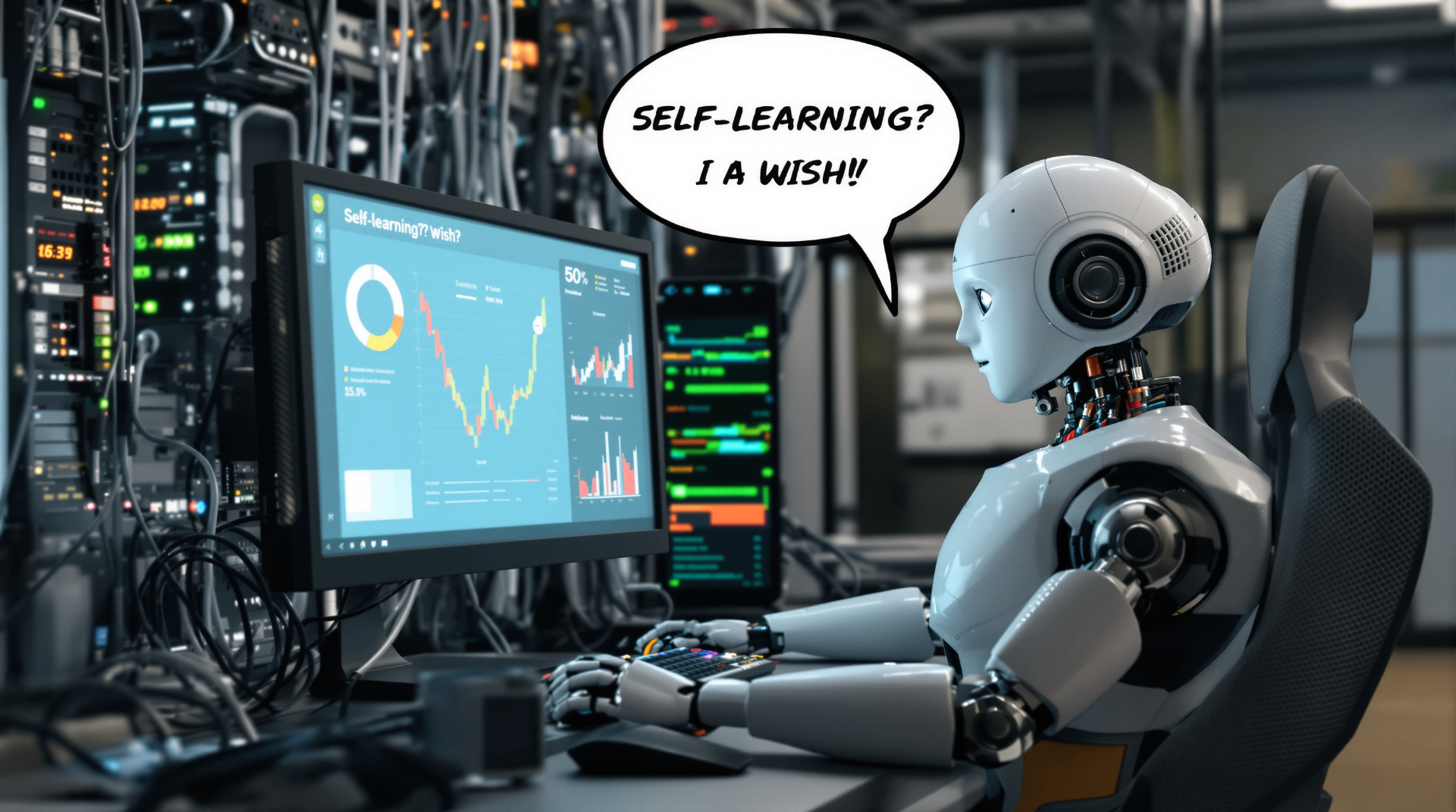
Some imagine AI models magically get smarter on their own. In reality, training a model requires high‑quality data, computational resources and skilled engineers to monitor progress. Even self‑supervised and reinforcement learning algorithms depend on pre‑defined objectives and human oversight. Once trained, models cannot improve unless new data and feedback are provided and carefully evaluated. As a result, AI systems need continuous human direction and cannot simply "teach themselves" in any useful way.
2. "Can we fire the entire staff and replace them with AI?"

Automation can handle repetitive tasks, but it does not eliminate the need for people. The same report that notes widespread adoption also emphasises that human trust and oversight matter, and more than half of companies use multiple control methods—such as human approval and monitoring—to manage AI agents. AI lacks the judgement, empathy and contextual understanding that humans bring to customer service, leadership and creative work. It also requires people to train, maintain and audit the systems. Instead of replacing staff, AI augments them, freeing employees to focus on higher‑value tasks.
3. "Is AI always objective and correct?"
AI output is only as reliable as the data and algorithms behind it. If the training data contains biases, the model will reproduce them. Models can also hallucinate, especially when asked to generate content beyond their training domain. Organizations therefore implement control layers and human‑in‑the‑loop review to ensure safety and accuracy. Rather than accepting AI answers uncritically, teams should treat them as suggestions and apply domain expertise before acting.
4. "Can AI work without data?"

AI systems learn patterns from large datasets. Without data, there is nothing to learn from. Even generative models, which seem creative, are essentially remixing patterns found in training data. In many industries, data must also be cleansed, anonymized and labeled before it becomes useful for machine learning. Businesses that want to adopt AI should start by organizing their data and ensuring they have the right privacy and governance practices in place.
5. "Does AI think like a human?"
Current AI models operate on statistical correlations rather than understanding. They do not possess consciousness, self‑awareness or genuine reasoning. Large language models can produce fluent text, but they have no intent or awareness of what they are saying. This distinction is why humans remain in the loop: people provide context, ethical judgement and emotional intelligence that machines lack. Advances in AI may mimic more complex reasoning in the future, but today's systems are specialised tools, not artificial minds.
Why These Myths Persist
AI technologies have advanced rapidly, and media headlines often exaggerate capabilities or focus on spectacular examples. Because 85% of organizations adopt AI only in one or a few workflows, many people have limited hands‑on experience and fill knowledge gaps with speculation. Popular culture also depicts sentient robots and self‑evolving algorithms, reinforcing the idea that AI can act independently. In practice, companies invest in AI to automate specific tasks while keeping humans involved for oversight and strategic decision‑making.
Conclusion
AI is reshaping industries, but it is not a magic wand. Models do not train themselves, cannot replace entire workforces, and are neither infallible nor human‑like. Real AI implementations require data, careful design and human supervision. As adoption grows—already 78% of organizations use AI—leaders should focus on realistic benefits: automating repetitive tasks, improving productivity and enabling staff to tackle creative, empathetic and strategic work. Dispelling these myths helps organizations plan AI projects responsibly and ensures that people remain central to innovation.