Advances in machine learning and generative AI have created the impression that models can simply train themselves. In reality, modern AI systems learn in distinct phases and always require human involvement and data governance. This article explains the difference between training during development, fine-tuning in production, and why a "self-learning" system still needs monitoring and corrections.
Ready to implement AI?
Get a free audit to discover automation opportunities for your business.
Development: training vs. fine-tuning
Training from scratch
Training is the process of building a model from the ground up using large, labelled datasets and heavy computational resources. It involves optimizing the model's parameters so it can generalise to unseen data. Building a model from scratch is necessary when you need maximum control or when no suitable pre-trained model exists. This phase requires significant time, specialized expertise and compute infrastructure; it is also performed periodically rather than continuously.
Fine-tuning pre-trained models
In many applications, companies start with an existing model that has already learned general patterns and then fine-tune it using a smaller, task-specific dataset. Fine-tuning adapts the model to a particular domain or language and is faster and more resource-efficient than training from scratch. Fine-tuning is typically done when launching a new feature or product, and may be repeated as new data becomes available. It is not continuous self-training; instead it is a controlled adjustment guided by human engineers.
Inference – the production phase
Once a model is trained and fine-tuned, it moves into inference, where it generates outputs (predictions, classifications, responses) in real time. Training and inference are distinct phases; training uses large labeled datasets and heavy compute, while inference applies the model to new inputs and becomes the major cost driver. Inference costs accumulate with each prediction and often account for 80–90% of an AI system's lifetime cost. Because inference must meet latency, throughput and accuracy requirements, teams monitor and tune the system continuously.
Can models "learn" in production?
Some organisations want models that automatically improve themselves in production. However, a robust self-learning system requires a full MLOps pipeline: collecting new data, curating and labelling it, retraining or fine-tuning the model, and redeploying it. Even after deployment you must "monitor and retrain" the model to correct accuracy drift and handle changing data. Without such processes, models will not improve and may degrade over time.
Why human oversight is essential
Continuous monitoring and quality checks
AI models rarely operate perfectly when confronted with real-world data. Maintaining high performance in production involves continuous monitoring of model inferences, thorough review of low-confidence outputs and edge cases, and regular quality checks for regulatory compliance. Humans must decide when to override the model, provide feedback and adjust parameters.
Data and ethical considerations
Self-learning relies on a steady stream of high-quality, representative data. If a model is retrained on biased or erroneous data, it can amplify mistakes or cause ethical issues. Engineers need to curate datasets, remove outliers and ensure they comply with privacy regulations. Automated data collection and retraining without oversight risk embedding biases and reducing model reliability.
Distinguishing tasks from jobs
Automation has clear benefits, but it targets tasks rather than entire jobs. Studies show that 45% of work activities could be automated using existing technology, while fewer than 5% of occupations can be fully automated. This means AI can handle repetitive or routine tasks but still relies on people for decision-making, creativity and empathy. For example, customer support chatbots can answer simple queries, yet human agents must handle complex issues and maintain relationships.
DIY vs. off-the-shelf solutions
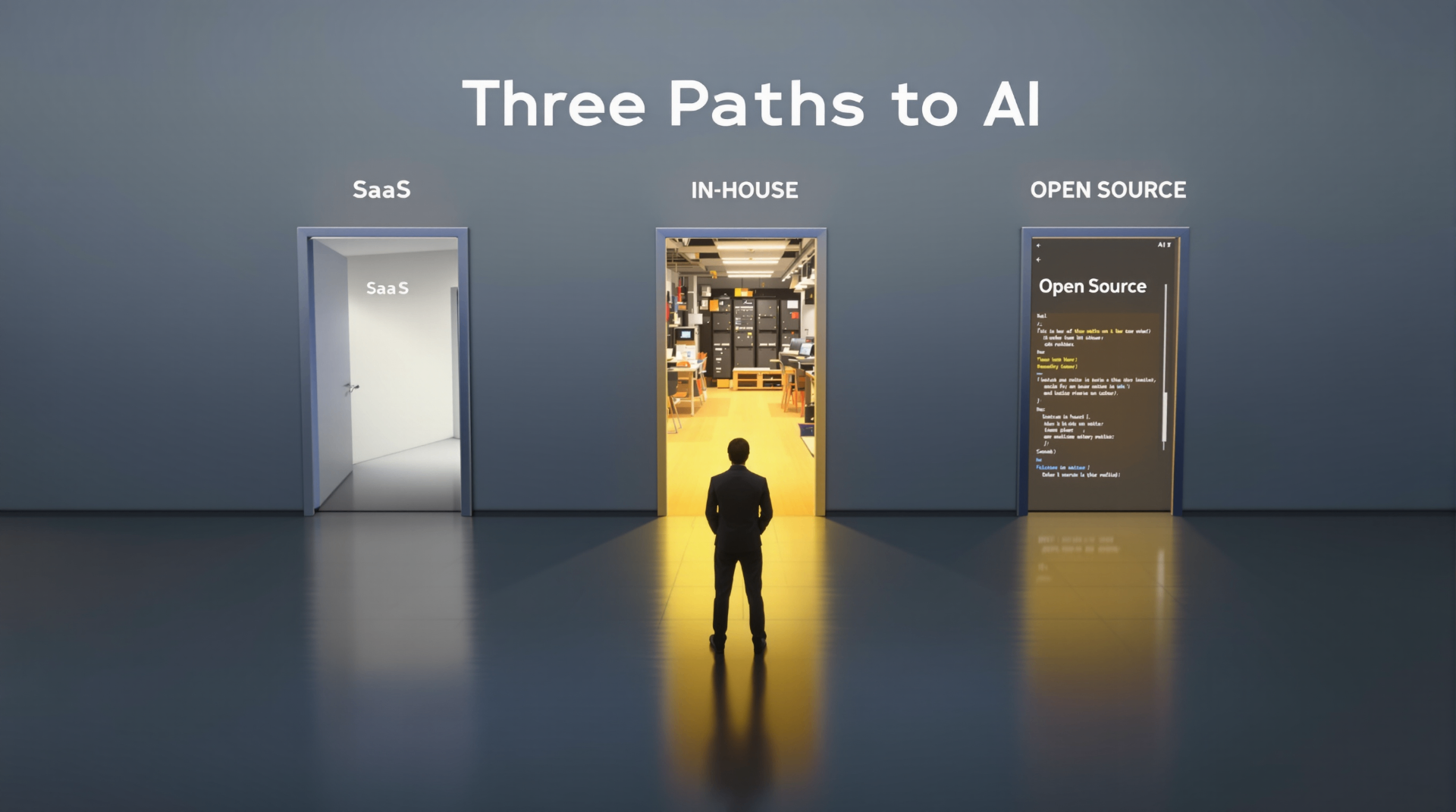
Companies considering self-learning systems must decide between building their own models or using managed services. Building in-house provides control and flexibility but requires experienced data scientists, domain experts and MLOps engineers. Off-the-shelf APIs and SaaS platforms can accelerate deployment but are limited by the provider's data and update cycles. Regardless of approach, no system will train itself indefinitely without human maintenance.

Conclusion
Modern AI models do not spontaneously learn on their own. Training and fine-tuning are deliberate processes conducted during development and periodically revisited when new data becomes available. Once in production, models perform inference and need continuous monitoring to maintain quality. Even advanced automation can only handle certain tasks—humans remain essential for providing data, making strategic decisions and ensuring ethical use. A successful AI strategy blends automation with human oversight to achieve reliable, responsible outcomes.